Northfield
Mandolins & Guitars
EST. 2007 | usa
Archtop | Acoustic | Electric Guitars | Mandolins
“These instruments represent the very best of what we currently know how to do.”
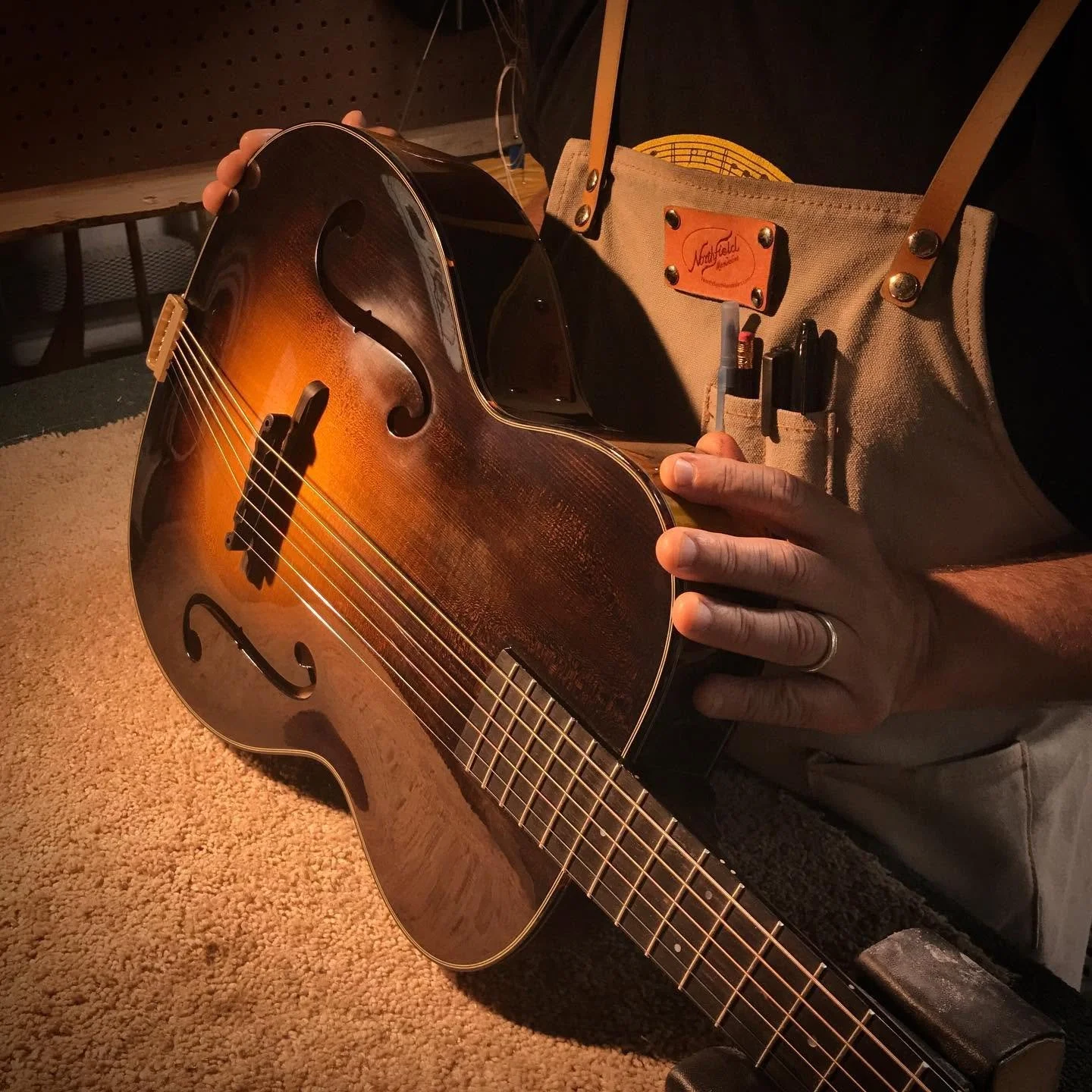
Adrian bagale | Founder & Designer
-
Today, Northfield operates workshops in Marshall, Michigan, and Qingdao, China. The two are not a headquarters and an outside supplier. They are parts of the same company, developed through longstanding personal and professional relationships. Both teams are capable of building complete instruments, while designs, processes, experiments, and experience move continually between them. Adrian Bagale has described the people behind those workshops as family, relationships built over decades rather than conventional manufacturing arrangements.
Northfield’s foundation is rooted deeply in the great American mandolin tradition, particularly the carved instruments of the early twentieth century. But vintage instruments are treated as reference points rather than instructions. Their proportions, materials, construction, sound, successes, and even failures offer evidence that can inform the next instrument.
That philosophy has allowed Northfield’s work to expand naturally. Traditional mandolins led to mandolas and octave mandolins. The Artist Series collaboration with Mike Marshall became a decade-long study in how instruments mature and what experience teaches that cannot be understood when an instrument is new. Electrification, alternate scales and forms, modern design and manufacturing technologies, and collaborations with musicians opened still more possibilities.
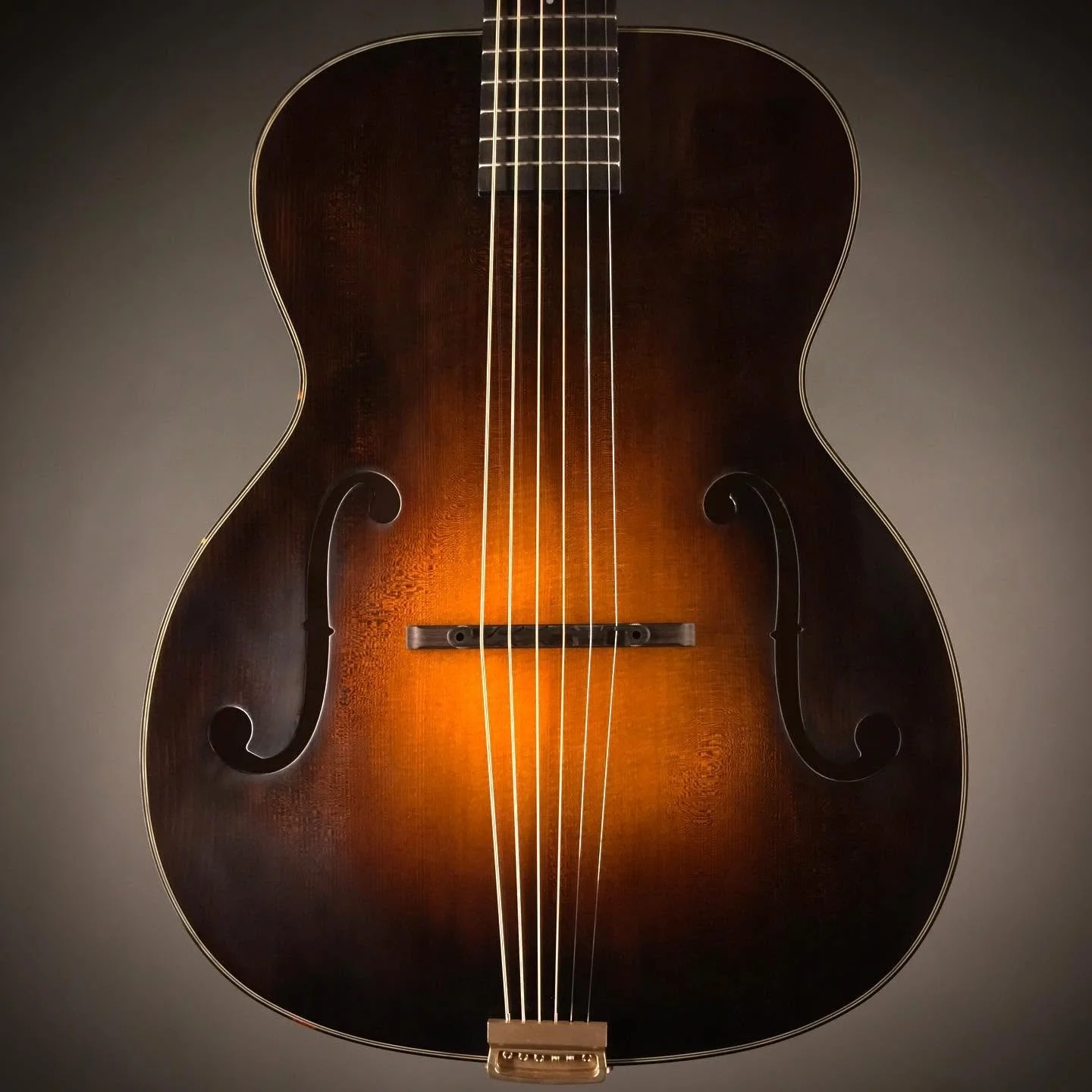
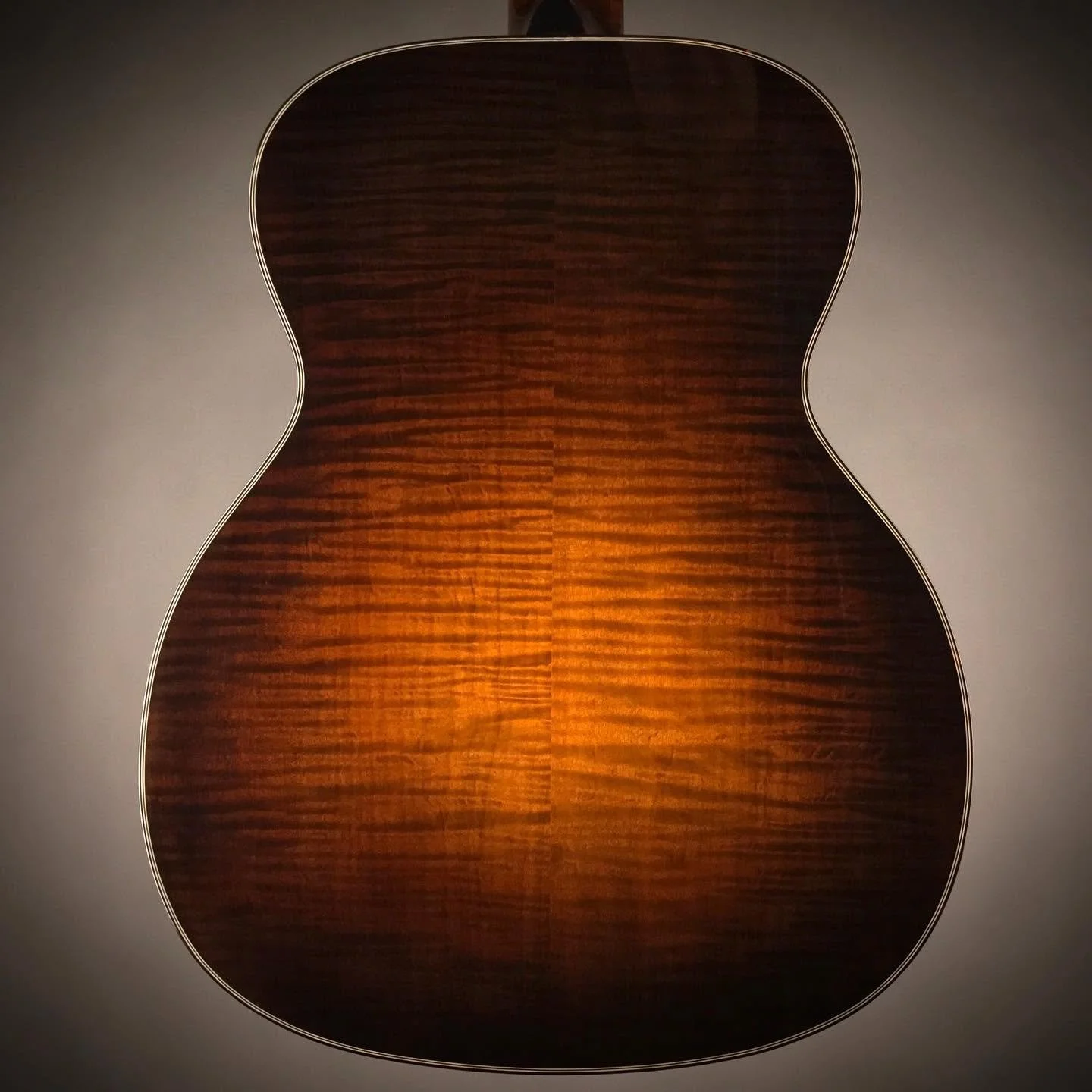
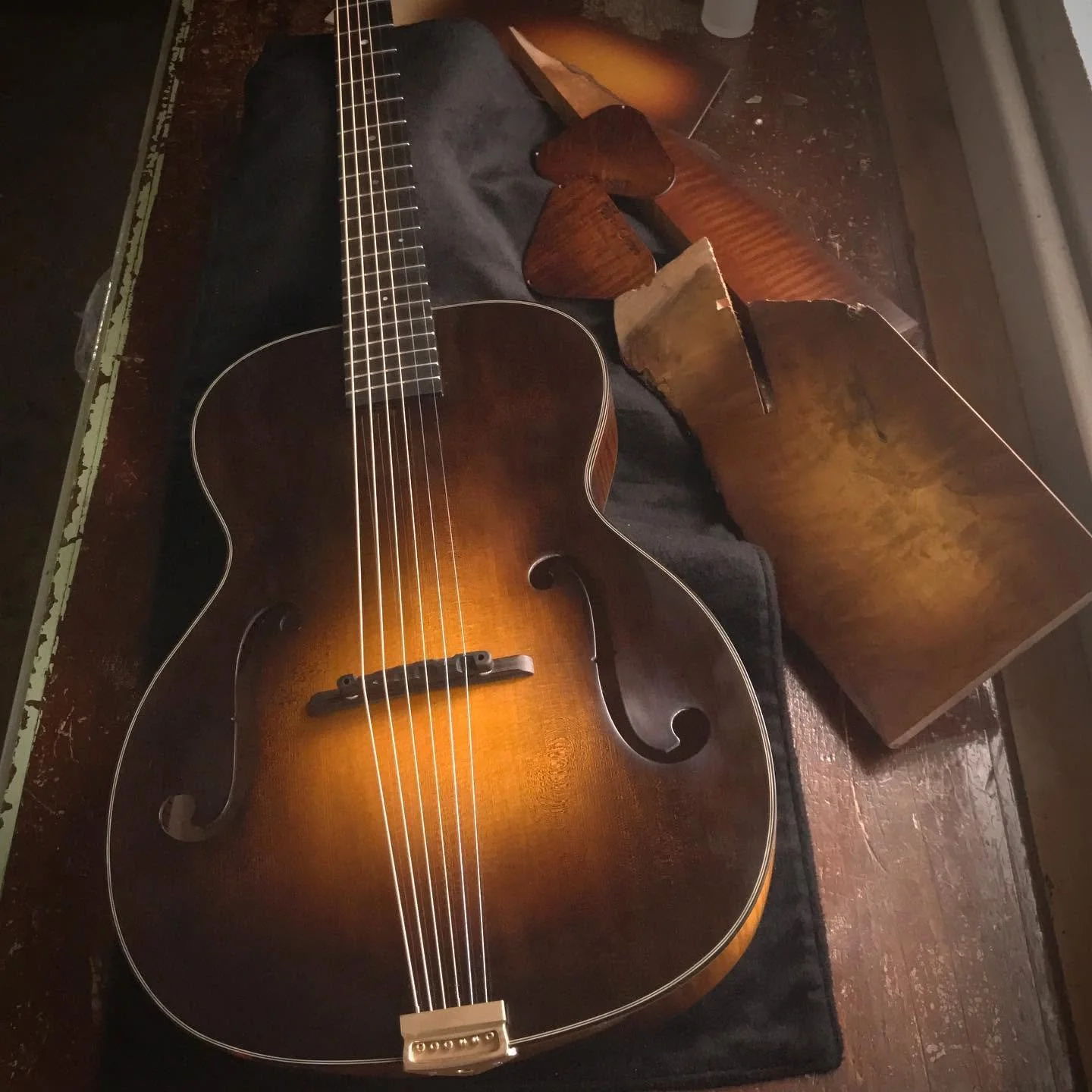
Northfield’s arrival at the guitar follows that same path. The company’s Archtop Octave Mandolin revealed the potential of its compact carved-top body almost immediately, planting an idea that would eventually become The Rival. For a company widely known for mandolins, a guitar might appear to be a departure. Inside Northfield, it is closer to a reunion.
The connection is curiosity: about old instruments and new technology, about sound and ergonomics, about what musicians are playing now, and about instruments that might encourage them to play something that has not existed before.
Nearly two decades in, Northfield remains less interested in preserving categories than in contributing to what comes next.
Watch Elden Kelly perform “Variations on a California Hotel” on the Northfield Rival Archtop Guitar, paired with Henriksen and Humphrey amps. A musical demo showcasing the Rival’s warm archtop voice, responsiveness, and versatility.
the rival
demo
boutique guitar showcase entour | 2026
-
![An acoustic Northfield guitar with a dark body surface, showing the string, neck, and bridge, positioned on a black background with white text overlay for a guitar showcase event.]()
New List Item

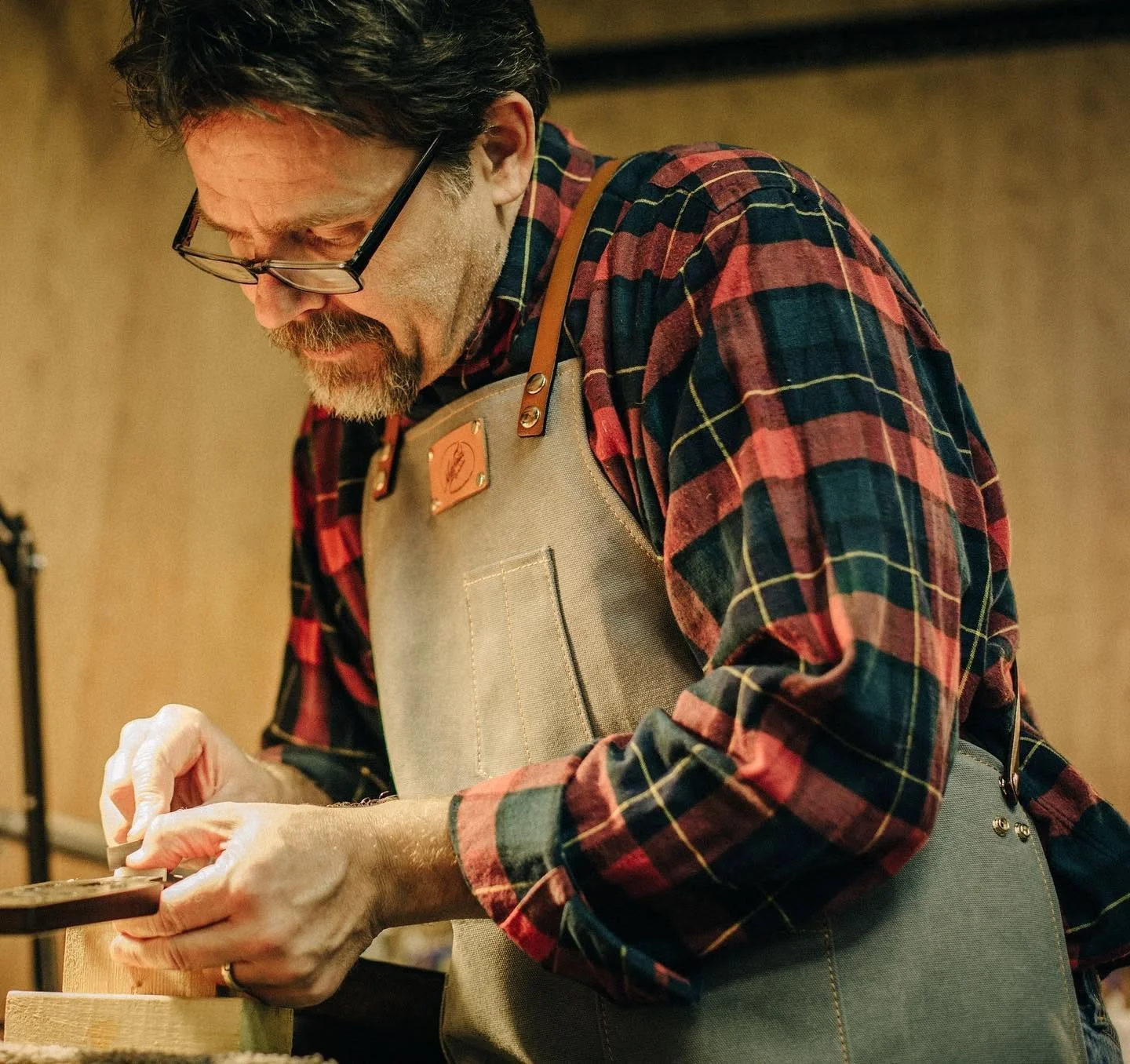
adrian bagale | Founder & Designer
“I just wanted to know if it was possible… ultimately maybe affect music…by creating instruments that people play new music on.”
-
A guitarist first, Adrian moved to Michigan to attend Central Michigan University and began working in music retail at Cook’s Music in Mount Pleasant. In 1997, he joined Elderly Instruments in Lansing and eventually became a Vintage Acoustic Instrument Specialist.
Elderly became an education of its own. Surrounded by historic Martins, Gibsons, mandolins, musicians, and repair people with extraordinary knowledge, Adrian was able to study the instruments that had helped define American guitar and mandolin making. He bought vintage instruments when he could, attempted repairs, asked questions, and, importantly, played them.
It established an idea that has followed him throughout his career: old instruments matter not simply because they can be reproduced, but because they provide evidence. Materials, proportions, construction methods, successes, failures, feel, and sound can all offer clues about what an instrument might become next.
In 2002, Adrian moved to San Francisco to work in product development for Saga Musical Instruments. The role took him throughout Asia, working directly with instrument workshops and manufacturers in China, Japan, and Korea. In 2006, he, his wife Katie, and their young family moved to Qingdao, China.
Living there changed the trajectory of his life. Instead of visiting factories, Adrian worked alongside craftspeople, suppliers, and manufacturers and learned how an instrument moves from an idea to a drawing, through prototypes and materials, and eventually into repeatable production. The relationships became personal as well as professional. Adrian has described the people with whom he built Northfield as family; his children grew up knowing them and team members have travelled back and forth between China and the United States for years.
In 2008, Adrian began a small mandolin workshop in Qingdao with longtime collaborators Kosuke Kyomori and Zhang Xi Sheng. That experiment became Northfield Mandolins.
Northfield allowed them to test a different model of instrument making: skilled handwork and modern manufacturing, American and Asian experience, historical knowledge and experimentation, all working together rather than being separated into categories of origin or price. Adrian’s goal has remained remarkably consistent: make the best instruments they can, not simply the most.
His career, however, reaches well beyond Northfield. Adrian served as Chief Operating Officer and manufacturing partner with Voyage-Air Guitar, contributing to the development and production of its patented folding-neck guitars. His fascination with historic instruments also led to his participation in a project using CT scanning to examine important violins from The Henry Ford collection, applying contemporary imaging technology to instruments made generations earlier.
A longstanding relationship with capo designer Rick Shubb developed into another significant chapter. When Shubb needed a new manufacturing solution, he turned to Adrian and his Qingdao team. The collaboration eventually grew into Shubb International, extending Adrian’s work into product development, manufacturing, international distribution, and brand strategy.
Despite the breadth of that career, Adrian still describes his path as largely instinctive. He entered the industry because he was a player fascinated by how things worked, not because he had planned to become an instrument-company executive. Northfield’s progression from F-style mandolins to octave instruments and eventually guitars followed much the same pattern: one musical question creating the next. He has said that the underlying goal was to find out whether they could make instruments they wanted to play and perhaps influence music by giving musicians tools on which to create something new.
That makes Northfield’s recent move into guitars particularly personal. Adrian grew up wanting to be a jazz guitarist, in a family where jazz and the electric guitar were central influences. After a career that carried him from Rochester to Michigan, California, China, and through almost every corner of the fretted-instrument world, six strings are less a new destination than a return to where he began.
Today, from historic Marshall, Michigan, only a short distance from Kalamazoo and the place where many of the Gibson instruments that first fascinated him were built, Adrian continues essentially the same pursuit that has occupied him for decades: study what made great instruments great, understand why they worked, and then ask what might happen next.